Our Blogs

Latest insights from Pramano Hub

Pramano Hub Atlas:

From School to Startup -
The Journey of Building a Digital Agency at 17

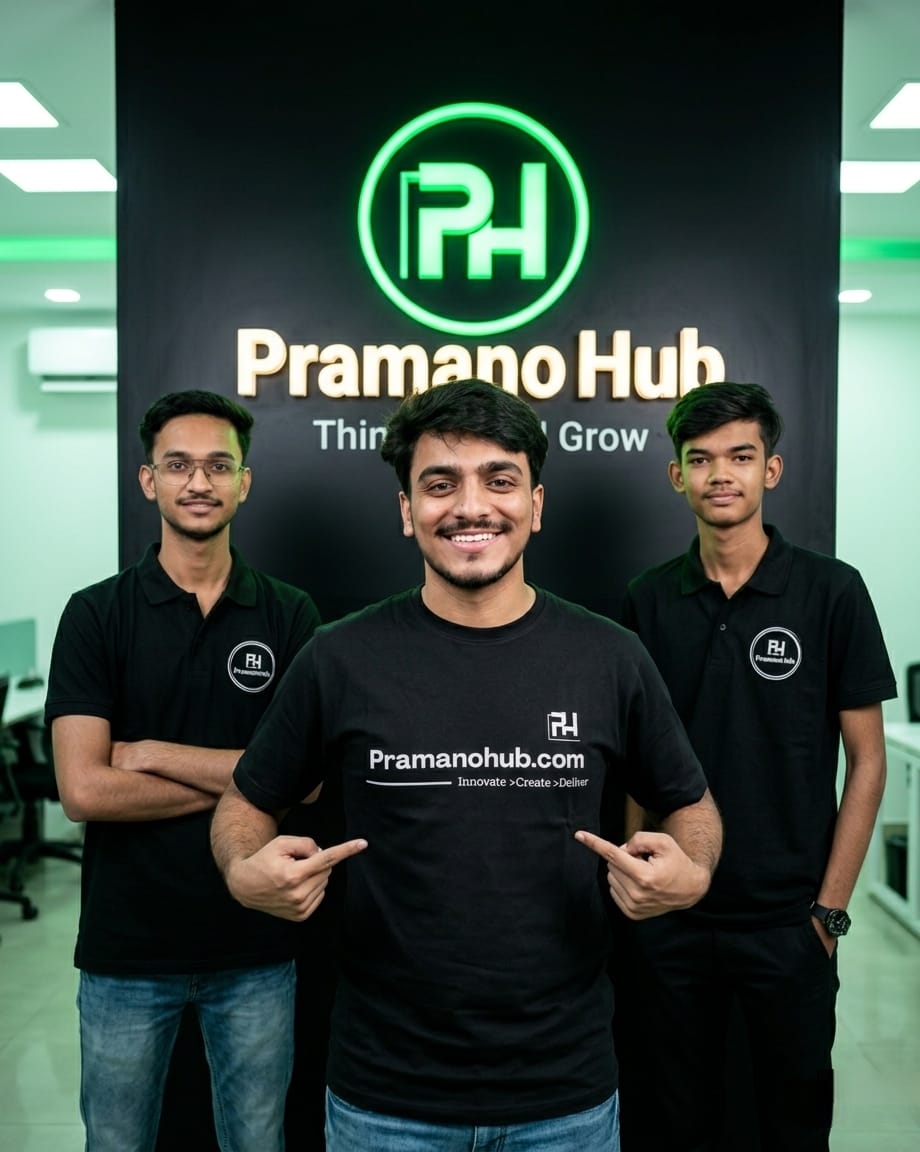
Most 17-year-olds are worried about board exams. Akash Singh was thinking about building a company. That’s not to say he had it all figured out — he didn’t. But while people around him were following the usual path, Akash was staying up late reading about web development, understanding how businesses worked online, and quietly shaping an idea that would eventually become Pramano Hub. This is that story. It Started in Class 11 There was no dramatic “eureka” moment. No investor meeting, no pitch deck. Just a curious student in Class 11, deeply interested in technology and design, wondering why so many businesses around him had such a weak online presence. He started small — freelancing here and there, building basic websites, and learning what clients actually needed. Every small project taught him something new. And slowly, a bigger question began to form: What if this wasn’t just freelance work? What if it became something real? That question gave birth to Pramano Hub. The Friends Who Stuck Around Akash will probably tell you this himself — he didn’t build this alone. Utkash Singh and Kartik Sahu became part of the journey during his time in polytechnic college. All three were IT students — naturally curious, always exploring how things work beyond textbooks. What started as casual conversations about tech, ideas, and learning soon turned into something deeper. At one point, Akash made a bold decision — he left college. Not out of confusion, but clarity. He wanted to return to school, reset his path, and pursue his vision on his own terms. It wasn’t conventional. But what matters is this: Utkash and Kartik stayed. They continued their IT studies while contributing to Pramano Hub — a level of loyalty and belief that’s genuinely rare. Utkash brought focused, reliable development skills Kartik added strong technical execution Together, they became the foundation that could actually build things — not just imagine them. Sometimes, the best partnerships don’t start in boardrooms. Sometimes, they begin in classrooms. Building Something Real Pramano Hub began with a simple goal: Help businesses build a strong digital presence using creativity and modern technology. Simple idea — but real execution. Over time, the team worked on: Custom websites Brand identity design Digital tools Presentations and creative assets Each project added experience. Each client added confidence. What started as an idea slowly became something tangible — something real. The “Atlas” Mindset Why Atlas? In Greek mythology, Atlas carries the weight of the world on his shoulders — a symbol of endurance and responsibility. For Pramano Hub, Atlas represents a quiet kind of ambition: We’re building something big — and we’re okay with how long it takes. The vision is to evolve into a technology-driven innovation space — working with AI, experimenting with new ideas, and building solutions that matter. Not just locally. Anywhere. The AI Chapter One of the most exciting directions for Pramano Hub is artificial intelligence. The team is exploring: Automation tools Smart platforms Data-driven systems Modern development frameworks Not because it’s trendy — but because they believe this is where real value will be created in the future. They’re learning as they go. And that mindset — learning first, building second — is one of their biggest strengths. Growth Isn’t Always Visible Here’s the honest truth: Pramano Hub’s growth didn’t always look impressive from the outside. There were: Slow months Failed attempts Doubts Challenges balancing studies and work Building trust as a young team isn’t easy. But they kept going. They kept improving. They kept showing up. They kept learning. And that consistency — even when it felt boring — is what actually made the difference. What This Story Is Really About This isn’t just a startup story. It’s proof that you don’t need to wait — not for age, experience, or the “perfect moment.” Akash started at 17, from school, with limited resources and no guarantees. What he had was: Clarity Curiosity Willingness to learn And friends who believed in the journey And that was enough to begin. Because starting — that’s always the hardest part. Final Thought As Pramano Hub continues to grow and evolve, it stands as a reminder to every student with a big idea: Your age is not your limitation. Your vision is your starting point.

Read More →

AI Tools & Agents

The Rise of Agentic AI: How AI Agents Are Replacing Entire Business Teams in 2026

Not long ago, "AI" meant a chatbot that answered FAQs or a tool that autocompleted your sentences. That era is over. What's happening right now is something far more consequential — and most businesses are only just beginning to notice. We've entered the age of agentic AI. These aren't assistants waiting for your next command. They plan. They decide. They execute — and they loop back to check whether what they did actually worked. Think less "smart autocomplete" and more "a teammate who never sleeps, never burns out, and gets incrementally better every single week."
From tool to team member
Here's what makes this shift feel genuinely different. Earlier automation was brittle — it followed rules, broke on edge cases, and needed constant babysitting. Agentic AI is different in kind, not just degree. It handles messy, real-world workflows: a customer support pipeline that escalates intelligently, a marketing campaign that adjusts its own targeting mid-flight, a financial model that flags anomalies and rewrites its assumptions. In many companies today, a small cluster of AI agents is handling what used to require entire departments — drafting and sending emails, pulling CRM reports, analyzing ad performance, even screening candidates. These agents don't just work in parallel; they coordinate with each other, handing off tasks the way a well-run team would. "The question for most businesses is no longer whether to adopt agentic AI — it's whether they can afford to wait any longer."
Why startups are winning this moment
If you're building something lean right now, this is a genuine structural advantage. A two-person founding team with the right AI stack can now operate at a scale that would've required 20 people just three years ago. Customer support, content, data analysis, outreach — each of these can run largely on autopilot while the founders focus on the decisions only humans can make: product direction, relationships, creative bets. That's not a hypothetical. It's happening across industries — SaaS startups, e-commerce brands, consulting firms, even local service businesses. The ones moving fast are those willing to rethink their org chart entirely, rather than just layering AI onto the old structure.
What this means for the people still in the room
It would be dishonest not to acknowledge the harder part of this story. When entire operational layers can be automated, the roles that remain need to look different. Strategic thinking, creative judgment, relationship management, ethical oversight — these are where human value concentrates. The workers who thrive in this environment aren't those who resist the tools, but those who understand them well enough to direct them. And "directing AI agents well" is genuinely a skill — one that most schools aren't teaching yet, and most companies are figuring out on the fly. The window is open, but it won't stay open forever Early adoption advantages in technology tend to compress quickly. The companies that experimented with cloud computing early had years of head start on their competitors. With agentic AI, that window feels shorter — the pace of capability improvement means late movers are catching up to a target that keeps moving away from them. The good news is that the barrier to entry is lower than it's ever been. You don't need a machine learning team or a data science department. You need curiosity, a willingness to experiment, and clarity about what problems are actually worth solving. That last part, honestly, is still the hardest bit — and it's still entirely human. -----This piece reflects the author's perspective on AI trends as of April 2026. The space is evolving rapidly — check back often.

Read More →
Brand Identity

The Power of Brand Identity: Why Your Business Needs It More Than Ever in 2026

In today’s world, people have too many choices. Because of that, having a strong brand identity is not just important — it’s necessary. In 2026, the businesses that focus on their brand are the ones that people notice, trust, and stay loyal to.
What is Brand Identity?
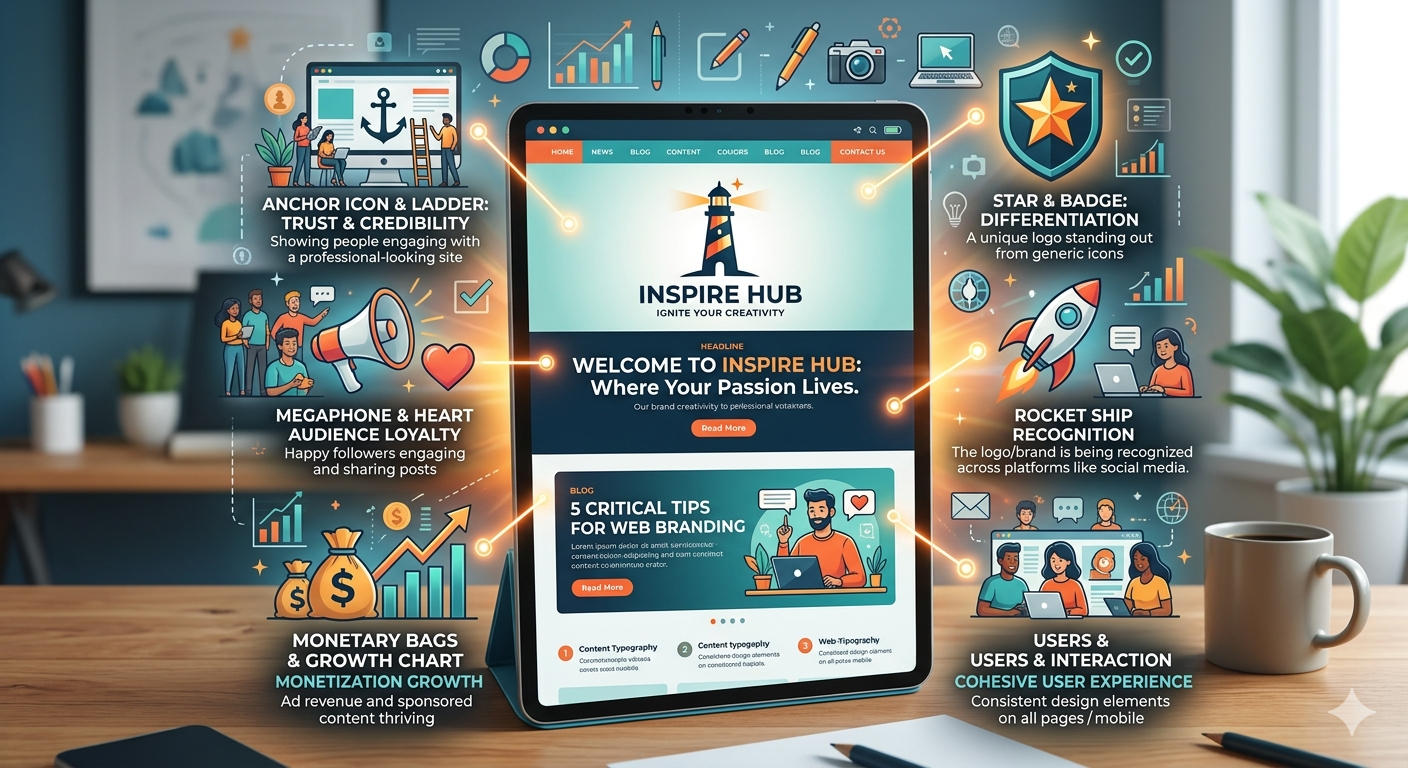
Brand identity is how your business looks, sounds, and feels to people. It’s not just your logo or colors — it’s your style, your message, and the emotions people get when they see your brand. A strong brand identity helps people remember you. It makes your business different from others, builds trust, and keeps customers coming back. With social media and online platforms growing fast, standing out has become even more important.
Why Your Business Needs a Strong Brand Identity in 2026
More Competition: Many new businesses are coming up, so a strong brand helps you stand out. Customer Loyalty: When people connect with your brand, they trust you and come back again. Consistency Everywhere: Your brand looks and feels the same across all platforms, which builds a strong image. Attracts Good Talent: People prefer to work with brands they believe in. Easy to Adapt: A strong brand helps your business adjust to changes in the market.
How to Build a Strong Brand Identity
Define Your Brand: Be clear about your mission, values, and what makes you different. Create Visuals: Design your logo, colors, and fonts that match your brand personality. Set Your Message: Use a consistent tone and style when you communicate. Be Real: Be honest and authentic — people can easily tell if you’re fake. Connect with People: Talk to your audience through social media and content to build a strong relationship. A strong brand identity in 2026 is not just about looking good. It’s about building a real connection with people and standing out in a crowded market. If you haven’t worked on your brand yet, now is the right time to start.

Read More →
🤖
AI Assistant